
When a component demands tolerances measured in a few ten-thousandths of an inch, the machining process behind it matters just as much as the design on the print. Complex parts with slender profiles, tight features, and demanding surface finishes push conventional turning to its limits, and that is exactly where a specialized approach earns its keep. If you have ever asked yourself why choose swiss screw machining over standard methods, you are already thinking about the details that separate a good part from a great one. For manufacturers seeking dependable swiss machining services in Chicago, understanding the strengths of this process helps you make smarter sourcing decisions.
Swiss screw machining, sometimes called Swiss turning, originated in the watchmaking industry, where miniature components required extraordinary accuracy. That heritage still defines the process today. The technology has evolved into a cornerstone of modern precision manufacturing, producing everything from surgical instruments to aerospace fittings. At Precision-Tek Mfg. Inc. in Arlington Heights, we rely on Swiss machining to deliver the kind of consistency that intricate, high-volume work requires.
What Makes Swiss Screw Machining Different
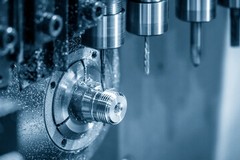
The defining feature of a Swiss lathe is its guide bushing. Unlike a conventional lathe that grips the workpiece in a chuck and lets it extend outward, a Swiss machine supports the bar stock very close to the cutting tool. This means the material is held rigidly right where the cutting happens, which dramatically reduces deflection and vibration. For long, thin parts that would otherwise flex under tool pressure, that support is the difference between a scrapped part and a flawless one.
Because the material is fed through the guide bushing as it is machined, the cutting forces are concentrated at a fixed point of maximum stability. That geometry allows tools to remove material aggressively while still holding remarkably tight tolerances. When people wonder why choose swiss screw machining for slender shafts, pins, and connectors, this fundamental design advantage is usually the answer. It is engineering built specifically for the parts that give other processes the most trouble.
Precision and Repeatability at Volume
Complex components rarely come in orders of one. More often, a customer needs thousands of identical parts, each one indistinguishable from the last. Swiss machines excel here because they combine that guide bushing stability with sophisticated multi-axis control and live tooling. A single machine can turn, mill, drill, and thread in one continuous cycle, finishing a part complete without moving it to a second operation.
That single-setup capability matters more than it might seem. Every time a part is removed and re-fixtured, an opportunity for error is introduced. By completing intricate features in one pass, Swiss machining preserves accuracy from the first piece to the last. This repeatability is why so many demanding sectors depend on it, and why our team invests in the equipment and expertise to run it well. You can see the range of work this enables across our screw machine products manufacturing capabilities.
Ideal Applications for Complex Parts
Not every part calls for Swiss turning, but for a certain family of components it is hard to beat. The process shines when parts are small in diameter, feature-rich, and required in significant quantities with unforgiving tolerances. Think of the components hidden inside medical devices, hydraulic systems, electronic connectors, and precision instruments. These are the parts where a fraction of a thousandth of an inch determines whether an assembly functions.
Swiss machining is well suited to work such as:
- Miniature pins, shafts, and dowels with high length-to-diameter ratios
- Threaded fasteners and fittings with fine, precise threads
- Contoured connectors and terminals for electronics
- Surgical and dental components requiring smooth finishes
- Fluid-handling parts with tight bore and sealing tolerances
The materials matter too. Swiss machines handle a wide spectrum of stock, and we work confidently across metals and polymers. Whether your design calls for the corrosion resistance of brass part manufacturing, the strength of steel, or a lightweight engineered plastic, the process adapts to the requirements of the application.
Efficiency That Protects Your Budget
Precision is only half the story. A frequently overlooked reason why choose swiss screw machining is its efficiency on longer production runs. Once a program is dialed in, a Swiss machine can run with minimal supervision, producing complete parts around the clock. The consolidation of multiple operations into one cycle reduces labor, handling, and total lead time, all of which influence the final cost of a component.
Reduced scrap also protects value. Because the process holds tolerances so reliably, fewer parts fall outside specification, and expensive material is not wasted. For customers ordering complex components in volume, those savings compound over the life of a program. High initial precision translates directly into lower long-term cost, which is a compelling argument whenever quality and budget both sit at the top of the priority list.
Why Local Expertise Matters
Sourcing precision parts is about more than a machine list. It is about partnering with a shop that understands your drawings, communicates clearly, and stands behind its work. Being based in Arlington Heights lets us serve Chicago and the surrounding areas with the responsiveness that tight project timelines demand. When a question comes up on a print or a design change arrives late in the process, proximity and clear communication keep your project moving.
Our team has spent years refining the craft behind complex-component production. That experience shows up in the quality reviews, the process controls, and the willingness to consult early on manufacturability. You can learn more about our approach on our mission page, where quality, innovation, and service anchor everything we do. Choosing an experienced swiss screw machine shop in Chicago means gaining a manufacturing partner, not just a vendor, and that relationship pays dividends when your components are anything but simple.
Bringing It All Together
The case for Swiss turning comes down to a few durable truths. The guide bushing design controls deflection so slender, intricate parts hold their tolerances. Single-setup machining preserves accuracy and repeatability across thousands of pieces. Efficient, near-lights-out production keeps costs in check while reducing scrap. When your components combine tight tolerances, complex geometry, and meaningful volume, few processes deliver on all three fronts the way Swiss machining does.
So the next time a demanding print lands on your desk and you find yourself asking why choose swiss screw machining, remember that the answer lies in the parts themselves. The more complex and precise the component, the stronger the case becomes. We bring that capability to Chicago and neighboring communities, backed by experienced people who care about getting every feature right.
If you have a complex component on the horizon, we would welcome the conversation. Reach out for a quote or to talk through the details of your project, and let our team show you how the right process turns a challenging design into a reliable, repeatable part.