
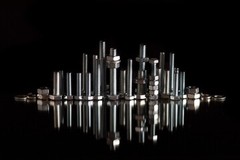
Every machine, vehicle, and medical device relies on tiny components that most people never think about, and few are more essential than the humble screw. Yet the precision screws that hold critical assemblies together are anything but simple to produce. Understanding how are precision screws made reveals a fascinating blend of engineering, automation, and old-fashioned craftsmanship. As a swiss screw machine shop in Chicago, IL, we see this process play out every day on our shop floor.
The question of how a flat piece of metal becomes a flawless threaded fastener involves more steps and more skill than most people realize. From material selection to final inspection, each stage demands tight tolerances and careful control. In this behind-the-scenes look, we will walk through the core stages of screw machining and explain why the equipment and methods used make such a difference in the finished part.
It All Starts With the Right Material
Before a single thread is cut, manufacturers choose the raw stock that will become the screw. Common choices include stainless steel, carbon steel, brass, aluminum, and even engineered plastics, each selected based on the strength, corrosion resistance, and cost requirements of the final application. A screw destined for a marine environment has very different needs than one used inside an electronic enclosure.
Material typically arrives as long bar stock or coiled wire, and its quality matters enormously. Inconsistent diameter, hidden impurities, or improper hardness can ruin a production run before it starts. That is why reputable manufacturers verify the certification and consistency of their incoming material. If you have ever wondered about the range of metals involved, our work with brass part manufacturing in Chicago, IL shows how material choice shapes the entire machining approach.
The Heart of the Process: The Screw Machine
At the center of the operation is the screw machine itself, a specialized lathe designed to turn bar stock into finished parts with minimal human intervention. When people ask how are precision screws made, this is the stage that does most of the heavy lifting. The machine feeds raw stock through a spindle, rotates it at high speed, and applies a sequence of cutting tools to shape the blank into the desired form.
There are two broad families of these machines. Traditional cam-operated screw machines use mechanical cams to drive the tooling in a fixed sequence, making them extremely fast and cost-effective for high-volume runs. CNC and Swiss-style machines, on the other hand, use computer control for exceptional accuracy on complex or small-diameter parts. Swiss machines are particularly valued because they support the workpiece very close to the cutting tool, which reduces deflection and allows incredibly tight tolerances on slender components.
During this phase, the machine performs several operations in quick succession. It turns the outer diameter, forms the head, drills or bores any internal features, and parts off the finished length. Because everything happens in a single, coordinated cycle, a well-tuned screw machine can produce thousands of identical parts with remarkable repeatability.
Creating the Threads
The defining feature of any screw is its thread geometry, and cutting those threads accurately is where precision truly shows. Threads can be produced through several methods depending on the part and the volume. Single-point threading uses a sharp tool that traces the helix of the thread one pass at a time, offering flexibility for unusual pitches. Die cutting uses a threading die to form external threads quickly, while thread rolling presses the thread form into the blank rather than cutting it away.
Thread rolling deserves special mention because it does not remove material. Instead, it displaces the metal, which creates a stronger, smoother thread with improved fatigue resistance. For fasteners that will endure vibration or heavy loads, this cold-forming method often produces a superior result. The choice among these techniques depends on the required strength, the material, and the production quantity, and an experienced manufacturer knows which approach fits each job.
Secondary Operations and Finishing
Once the basic shape and threads exist, many precision screws still need additional work. Secondary operations might include slotting the head, cross-drilling, knurling, chamfering, or adding specialized features that the primary machining cycle could not complete. These steps allow a single part to serve a highly specific function in a larger assembly.
Finishing then protects and refines the part. Deburring removes the sharp edges left by cutting, while heat treatment can increase hardness and strength. Surface treatments such as plating, passivation, anodizing, or coating improve corrosion resistance and appearance. Each of these finishing choices is driven by how and where the screw will ultimately be used. A fastener bound for aerospace faces far stricter requirements than one used in general assembly, which is one reason we serve such a wide variety of industries.
Inspection and Quality Control
No discussion of how are precision screws made would be complete without addressing quality control, because precision is meaningless without verification. Throughout production, parts are measured against exacting specifications using micrometers, optical comparators, thread gauges, and coordinate measuring machines. Even tiny deviations in diameter, thread pitch, or length can cause a part to fail in the field.
Good manufacturers build inspection into the process rather than treating it as an afterthought. First-article inspection confirms the setup is correct before a full run begins, and in-process checks catch drift before it produces scrap. Statistical process control helps identify trends so adjustments happen early. This disciplined attention to measurement is the difference between a part that merely looks right and one that performs reliably for years.
Why the Right Manufacturing Partner Matters
Knowing how are precision screws made highlights just how much expertise sits behind a component that fits in the palm of your hand. The machine, the material, the tooling, and the inspection all have to work together, and the people running the operation make the critical judgment calls that automation alone cannot. A skilled shop can recommend the most efficient method, suggest material alternatives, and anticipate problems before they appear in a production run.
That is why selecting among screw machine shops deserves careful thought. The best partner brings not only capable equipment but also the experience to deliver consistent quality on time, whether you need a short prototype run or high-volume production. Businesses throughout Chicago and the surrounding areas depend on reliable fasteners, and the right manufacturer becomes an extension of their own engineering team.
At Precision-Tek Mfg., Inc., we take pride in turning raw stock into dependable, precisely machined parts for customers across Chicago and nearby communities. If you have a project in mind or simply want to understand which approach fits your application, we invite you to learn more about our shop or reach out for a quote. Precision is in our name for a reason, and we would be glad to put it to work for you.